
Cement Quality Control for Long-Lasting Infrastructure
07.04.2026
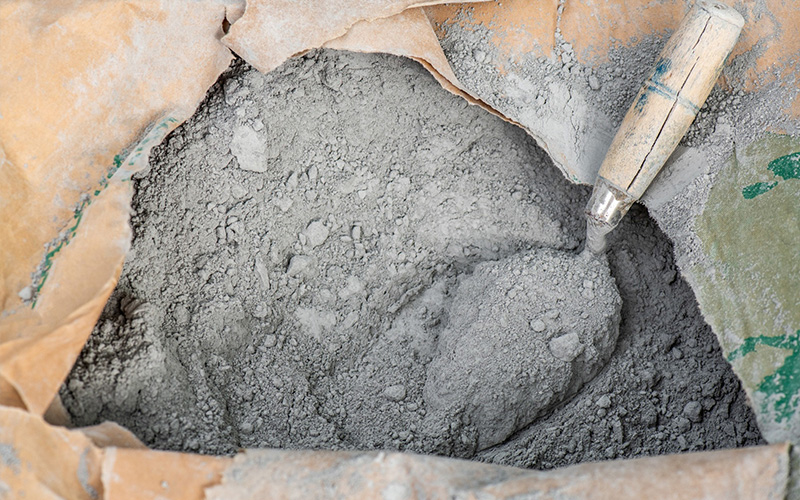
Infrastructure projects such as highways, bridges, ports, and industrial facilities are designed to serve communities and industries for decades. These structures must withstand heavy loads, environmental exposure, and continuous use without compromising safety or performance. Achieving this level of durability depends not only on design and construction methods but also on strict material quality control—especially when it comes to cement.
Cement quality control is a systematic process that ensures cement meets required standards from production to application. It plays a vital role in maintaining strength, durability, and consistency in concrete. Without proper quality control, even well-designed infrastructure projects can suffer from premature deterioration, increased maintenance costs, and structural risks.
Ensuring Consistent Cement Composition
Consistency in chemical composition is a fundamental aspect of cement quality control. Cement must maintain uniform proportions of key compounds to ensure predictable hydration and performance.
High-quality cement with consistent composition supports reliable strength development and reduces variability in concrete performance. This is essential for large infrastructure projects where uniformity is critical.
Regular Strength Testing and Verification
Compressive strength testing is a key component of cement quality control. It verifies that cement can achieve the required strength levels needed for load-bearing applications.
Routine testing ensures that cement consistently meets performance targets. This reduces the risk of weak concrete and helps maintain structural integrity over time.
Monitoring Setting Time and Workability
Setting time is crucial for both construction efficiency and structural performance. Cement quality control includes testing to ensure that setting time remains within acceptable limits.
Proper setting behavior allows for smooth placement and compaction of concrete, reducing the risk of defects and ensuring strong bonding between materials.
Control of Fineness and Particle Size
Cement fineness influences hydration rate, strength development, and workability. Quality control processes include testing particle size distribution to ensure consistent performance.
Uniform fineness helps achieve predictable concrete behavior, improving both construction efficiency and long-term durability.
Ensuring Soundness and Volume Stability
Soundness testing ensures that cement does not undergo excessive expansion after setting. Unsound cement can lead to cracking and structural damage.
Quality control measures verify volume stability, preventing internal stresses that could compromise infrastructure performance over time.
Proper Storage and Handling Practices
Cement quality can deteriorate if it is exposed to moisture or contamination during storage. Quality control extends beyond production to include proper handling and storage conditions.
Maintaining dry, protected storage ensures that cement retains its properties until it is used. This prevents performance loss and ensures consistent results.
Compatibility With Mix Design and Admixtures
Infrastructure projects often require specialized concrete mixes with admixtures for enhanced performance. Cement must be compatible with these components to achieve desired properties.
Quality control ensures that cement interacts properly with other materials, preventing issues such as delayed setting or reduced strength.
Reducing Permeability and Enhancing Durability
Low permeability is essential for long-lasting infrastructure, as it prevents water and chemicals from penetrating concrete. Cement quality control ensures that cement contributes to a dense and durable concrete matrix.
Durable concrete resists environmental damage, reducing maintenance needs and extending service life.
Protecting Reinforcement From Corrosion
In reinforced infrastructure, protecting steel reinforcement is critical for maintaining structural performance. Cement quality affects the density and impermeability of concrete, which act as a protective barrier.
High-quality cement reduces the risk of corrosion, preserving the strength and reliability of the structure over time.
Maintaining Uniform Performance Across Large Projects
Infrastructure projects often involve multiple phases and large volumes of concrete. Cement quality must remain consistent to ensure uniform performance across all sections.
Quality control processes help maintain this consistency, reducing the risk of weak zones and structural imbalance.
Supporting Lifecycle Performance and Cost Efficiency
Long-lasting infrastructure requires minimal maintenance and repair. Cement quality control plays a key role in achieving this by ensuring durable and reliable concrete.
Investing in quality control reduces lifecycle costs and improves overall project value, making it a critical aspect of infrastructure planning.
Conclusion: Quality Control as the Key to Infrastructure Longevity
Cement quality control is essential for building infrastructure that stands the test of time. It ensures consistent performance, reduces risks, and enhances durability across all structural elements.
By implementing strict quality control measures from production to application, construction professionals can deliver infrastructure that remains safe, reliable, and efficient for decades. Cement quality control is not just a process—it is a foundation for long-term structural success.